Bad debts and expected credit losses
Sizing the allowance, writing an invoice off, and what happens if they pay after all.
Sales → Bad debts holds the allowance for doubtful debts, and the write-offs and recoveries that go with it.
Choosing how the target is worked out
- Aging matrix: your own percentage on each aging bucket.
- ECL simplified: the rates are derived from your own payment history, then adjusted by a forward-looking factor you set and give a reason for.
The buckets are the same ones the A/R aging report uses, so the two can never disagree.
Posting a provision
The page shows the allowance held, the target today, and the difference. Post adjustment books only that difference: never the whole figure again.
Writing one off
Open the invoice and choose Write off as bad debt. If the customer pays later, record a recovery and the loss comes back.
-
Open Sales → Bad debts. The three tiles are the allowance you hold, the target today, and the difference between them.
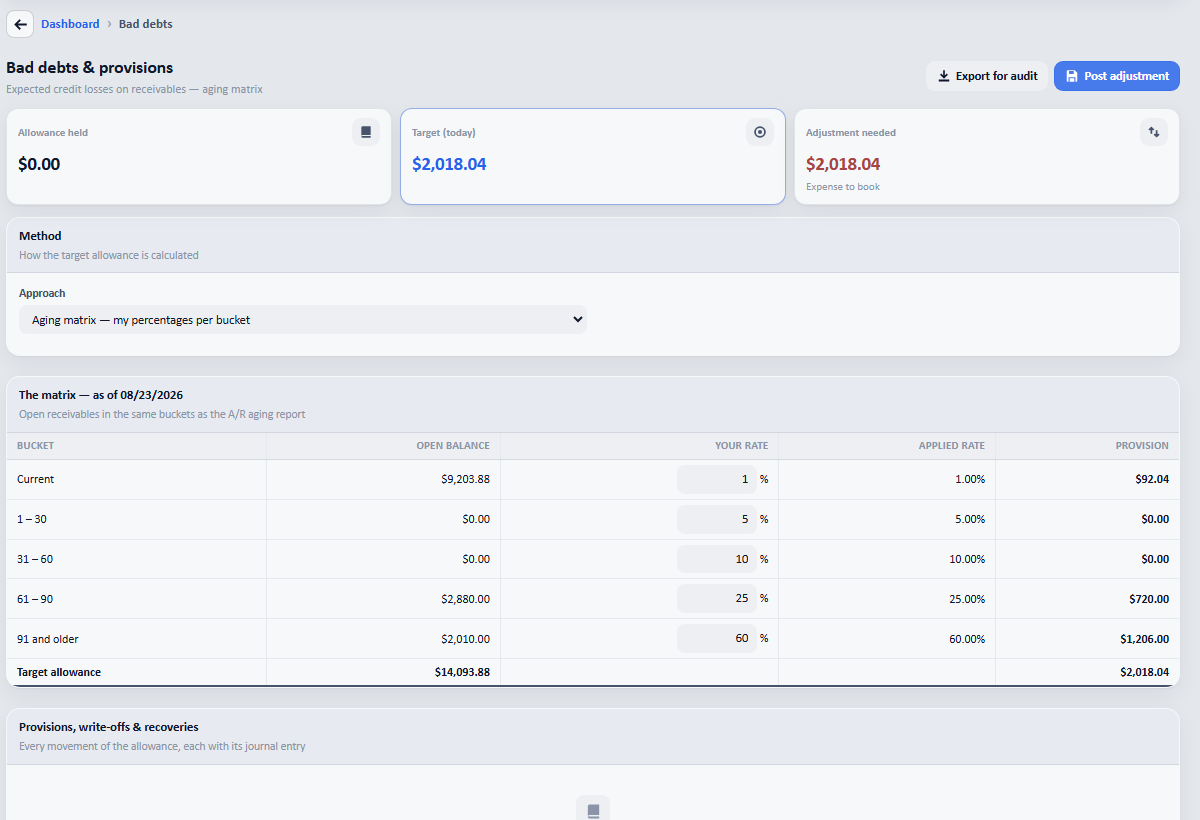
The matrix: open balance in each aging bucket, the rate applied, and the provision it produces. Post adjustment books only the difference.